

CIJ, DOD, TIJ, High-Resolution: What’s the Difference in Ink Formulation?
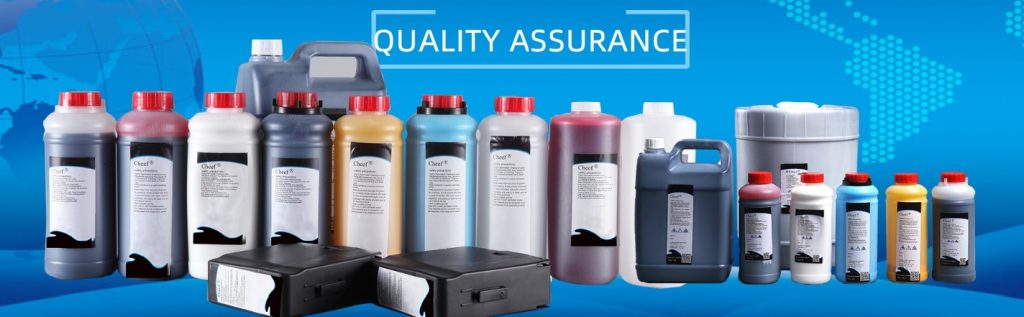
Introduction While all inkjet printers are designed to place tiny drops of ink onto a surface, not all inks are the same. The ink formulation must match the printing technology — and the difference between CIJ, DOD, TIJ, and High-Resolution (HR) printers lies in much more than just printer design. Each uses ink with specific chemical and physical properties suited to its drop generation method and target substrate. This article breaks down the key differences in ink formulations across these four industrial printing technologies and provides guidance for choosing the right ink for your system. 1. Continuous Inkjet (CIJ) Ink Formulation Key Features: Solvent-based (commonly MEK or ethanol) Low viscosity: 2.0 – 3.5 cP Requires conductivity: 800–1800 µS/cm (for droplet deflection) Fast-drying: 1–2 seconds Ink Types: Dye-based black inks (general coding) Pigmented inks (white, yellow for cables and dark substrates) UV-readable inks for security applications Typical Use Cases: Bottles, pouches, cables, food packaging — high-speed production lines with non-porous surfaces. — 2. Drop-on-Demand (DOD) Ink Formulation Key Features: Oil- or water-based (sometimes pigmented solvent-based) Higher viscosity: 8 – 20 cP No need for conductivity Large drop size: for visible, bold characters Ink Types: Pigmented inks for carton or crate labeling Oil-based inks for porous substrates Typical Use Cases: Shipping cartons, wood, pipes, cement bags — applications requiring large character marks and high throw distance. — 3. Thermal Inkjet (TIJ) Ink Formulation Key Features: Water- or ethanol-based, mostly dye-based Low to moderate viscosity: 1.5 – 4.0 cP No conductivity required Compatible