

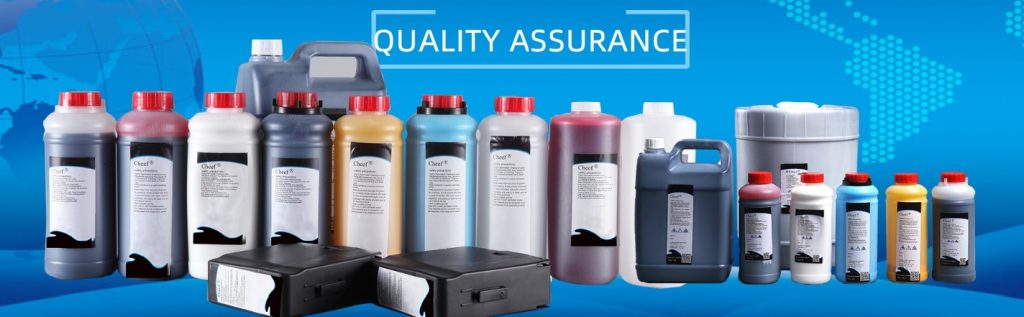
Choosing the Right Ink for Food Packaging: Compliance and Print Quality!
1. Why Food Packaging Requires Specialized Ink Food packaging comes into direct or indirect contact with consumable goods, which means that the inks used must comply with strict safety and regulatory requirements. In addition to safety, ink must also: Adhere to plastic, foil, or paper surfaces Dry quickly on high-speed lines Resist smudging and abrasion Remain legible through freezing, heat, or moisture 2. Direct vs. Indirect Food Contact Ink Contact Type Description Ink Requirement Direct Ink touches the food itself Must be fully edible, non-toxic, FDA compliant Indirect Ink touches outer packaging (e.g., sachets, lids) Must not migrate through the material Most industrial inks are formulated for indirect contact. Direct-contact inks are typically used for egg shells, tablets, or bakery products. 3. Regulatory Compliance for Food-Safe Inks Region Standard / Requirement USA (FDA) 21 CFR Part 175.105 for indirect food contact EU Regulation (EC) No. 1935/2004 & Swiss Ordinance China GB 9685 for additives in food-contact materials Global GHS labeling, MSDS, and migration testing ✅ Always verify that your ink supplier provides compliance documentation (MSDS, food safety certificate, test report). 4. Food Packaging Substrate Types and Ink Matching Substrate Ink Recommendation Flexible Film (PE, PP, PET) MEK or ethanol-based fast-dry ink Paper Cartons Water-based or ethanol-based dye ink Aluminum Foil Ethanol or acetone-based ink for strong adhesion Laminated Pouches Pigmented or UV ink for high contrast Glass Jars / Lids MEK-based CIJ ink 5. Ink Properties That Matter in Food Packaging Property Importance Fast Drying Avoids smudging on fast lines