
Sign up for One-Stop Solutions

Cheef Compatible Inks: Cost Savings Without Sacrificing Performance

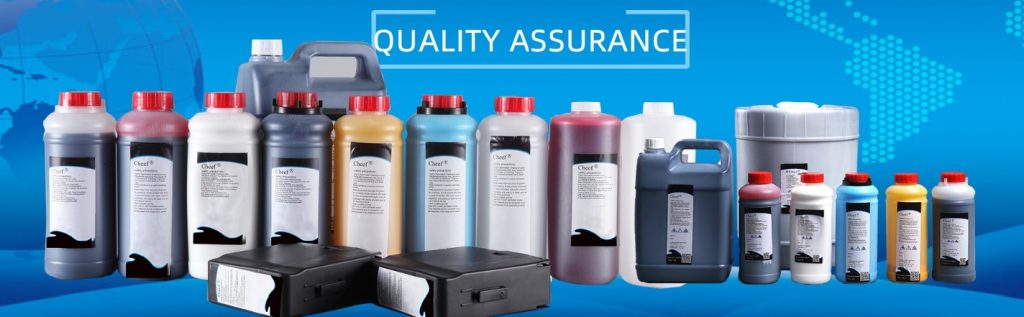
Introduction OEM inks from brands like Videojet, Domino, Linx, and Markem-Imaje are known for quality—but they often come at a premium. For manufacturers seeking performance without overspending, Cheef-compatible inks provide a cost-effective, proven solution. In this article, we explain what Cheef inks are, how they’re formulated, and how they compare to original inks in print quality, safety, compliance, and long-term printer health. 1. What Are Cheef Compatible Inks? Cheef inks are independently developed and manufactured inks engineered to be 100% compatible with major CIJ, TIJ, DOD, and TTO printers. Each ink is designed to match the chemical composition, viscosity, conductivity, and drying behavior of the OEM original. These inks are not refills or knock-offs—they are high-quality alternatives produced under strict QC and performance testing protocols. 2. Why Companies Switch to Cheef-Compatible Inks 30–50% cost savings per liter compared to OEM No software or chip locks for most printer models Backed by MSDS, GHS, and RoHS compliance Private label options for resellers and distributors Fast shipping & OEM-level support 3. Product Range Comparison OEM Brand OEM Ink Code Cheef Equivalent Application Videojet V420 / V423 C-V420MEK Plastic, PET, glass bottles Domino 2BK118 C-2BK118 General-purpose fast-dry coding Linx 1240 C-LX1240 PE bottles, PVC bags, cartons Markem-Imaje 5191 C-MI5191 Food packaging, paperboard 4. Quality Assurance Standards at Cheef Every Cheef ink batch is subjected to the following testing protocols: Viscosity and conductivity matched to OEM specs Print stability test on various substrates Jetting reliability at different line speeds Accelerated aging and shelf-life test


Continue Reading

Videojet Solvents and Make-Up Fluids: Matching Ink Codes Correctly

Introduction Videojet printers are widely used in industries such as beverage, food, cosmetics, electronics, and pharmaceuticals. While most users focus on ink selection, choosing the correct make-up fluid and solvent is equally critical to maintaining performance and printer longevity. This guide explains how to identify and match Videojet ink codes with their corresponding make-up fluids and cleaning solvents, helping you reduce downtime and maintain consistent print quality. 1. What Are Make-Up Fluids and Why Are They Important? Make-up fluid (also known as thinner or solvent) is used in CIJ systems to: Compensate for solvent evaporation Maintain ink viscosity and conductivity Enable proper droplet formation in the printhead Reduce the risk of nozzle clogging Each ink formula has a specific solvent base (MEK, ethanol, acetone, etc.), and using the wrong make-up can destabilize the ink system. 2. Common Videojet Ink and Make-Up Pairings Ink Code Ink Base Recommended Make-Up Application V420 / V423 MEK M513 General-purpose coding on plastic, glass, PET V705 (Soft Pigment) MEK M355 White codes on black cable and pipe V411 Ethanol M409 Food and pharma packaging, low odor requirement V393 UV-Readable M512 Security marking, invisible ink V480 Acetone M517 High-speed printing on film or foil 3. Why Ink-Make-Up Matching Is Critical Mismatching the make-up fluid and ink can lead to: Ink instability (clumping, viscosity shift) Faulty drop formation and poor code quality Frequent nozzle blockages Unnecessary wear on printhead and filters Videojet printers use a SmartCartridge™ system to minimize these risks, but **manual refills or third-party inks

Continue Reading

Domino TIJ Ink Cartridge Guide: Types, Colors, and Shelf Life

Introduction Domino’s Thermal Inkjet (TIJ) printing solutions offer high-resolution, cost-efficient coding for secondary packaging, pharmaceutical cartons, labels, and more. These printers use compact, replaceable ink cartridges that deliver exceptional print quality with minimal maintenance. In this guide, we cover the most commonly used Domino TIJ cartridges, their applications, and how to manage them for optimal performance and longevity. 1. Domino TIJ Printers and Cartridge Systems Domino TIJ printers are based on HP thermal inkjet technology and include models like: Domino G-Series i-Tech printers G20i, G30i, G50i models Custom OEM modules integrated into packaging lines Each printer uses specialized cartridges that are easy to swap out, with no bulk ink tanks or solvent systems required. 2. Common Domino TIJ Ink Cartridges Cartridge Code Base Color Key Features 510BK Water Black High-resolution printing on porous substrates (paper, cardboard) 511BK Solvent Black Dries quickly on non-porous surfaces like film, foil, and coated boxes 512BK MEK Black Fast-drying, excellent adhesion on plastics and synthetics 513UV UV Invisible Security printing — only visible under UV light 514CO Solvent Blue Color-coded printing for branding or identification 3. Selecting the Right Domino Cartridge For porous materials: Use 510BK (water-based) for carton boxes and kraft paper. For plastic film and foil: Choose 511BK or 512BK (solvent/MEK) for fast drying and strong adhesion. For high-speed lines: 512BK is ideal due to fast ejection and dry time. For traceability/security: 513UV provides invisible, UV-detectable codes. For color coding: Use 514CO or similar color cartridges from Domino. 4. Shelf Life and Storage

Continue Reading

Linx Ink Codes Decoded: Understanding 1240, 1244, 1059 and More

Introduction Linx Printing Technologies is known for producing reliable Continuous Inkjet (CIJ) systems with clean operation and cost-efficient consumables. One of the key components of operating a Linx printer successfully is selecting the correct ink – and for that, you must understand the Linx ink code system. This article will help you decode Linx ink codes like 1240, 1244, 1059 and others, showing their properties, compatible models, and usage recommendations. 1. Linx CIJ Printer Models and Ink Compatibility The following Linx printers use the ink codes covered in this guide: Linx 8900 / 8910 / 8920 / 8940 Series Linx 7900 / 5900 / 6200 (legacy models) Each ink requires the correct matching solvent (make-up fluid) for safe and stable operation. 2. Common Linx Ink Codes and Their Properties Ink Code Base Color Main Features 1240 MEK Black Standard fast-dry ink for general-purpose use 1244 MEK Black Enhanced adhesion to plastic, oily or waxy surfaces 1245 Ethanol Black Low odor, ideal for food and pharma packaging 1059 MEK White Pigmented ink for high contrast on dark surfaces 1014 Ethanol Blue Color coding for electronics or medical wires 3. Ink Code Usage Recommendations ✔ 1240 – Standard Black Ink A widely used MEK-based ink suitable for most applications including metal, PET, coated paper, and plastic containers. Ideal for general-purpose production lines. ✔ 1244 – Adhesion-Enhanced Black Ink Offers superior bonding to difficult surfaces such as polyethylene (PE), polypropylene (PP), and wax-coated packaging. Common in cosmetics and chemical labeling. ✔ 1245 –

Continue Reading

Markem-Imaje Inks Explained: CIJ Models and Ink Compatibility

Introduction Markem-Imaje is one of the most respected brands in industrial coding, particularly known for its Continuous Inkjet (CIJ) printing systems. From high-speed bottling lines to pharmaceutical labeling, Markem-Imaje offers a diverse range of inks for different substrates, regulatory requirements, and environmental conditions. In this guide, we break down the most commonly used Markem-Imaje inks, their features, printer compatibility, and tips for choosing the right ink for your application. 1. Common Markem-Imaje CIJ Printer Models 9020 / 9030 / 9040 (Legacy models) 9450 / 9410 / 9410E / 9620 SmartDate and Touch Dry systems (TTO & LCM, not covered in this article) Each printer model is designed with specific ink series in mind. Mixing incompatible ink types can cause nozzle clogs, unstable jetting, or system faults. 2. Popular Markem-Imaje Ink Codes and Properties Ink Code Base Type Color Main Features 5191 Ethanol Black Low-odor, excellent for food packaging 5196 MEK Black Fast-dry, general-purpose ink 5159 MEK (Pigmented) White High contrast, ideal for dark surfaces 5282 Acetone Black Super-fast drying for film and foil 5262 MEK UV Invisible under visible light, security coding 3. Recommended Applications by Ink Type ✔ 5191 – Ethanol-Based Ink Used widely in food packaging due to low odor and indirect food contact safety. Suitable for coated cartons, paperboard, and foil lidding. ✔ 5196 – Fast-Dry MEK Ink All-purpose CIJ ink for plastic, metal, and glass. Ideal for beverage lines, cable marking, and cosmetics. ✔ 5159 – White Pigment Ink Used on black wires, plastic parts, automotive

Continue Reading

Troubleshooting Inkjet Ink Issues: Fading, Smudging, Nozzle Blockage!

1. Why Ink Troubleshooting Is Crucial in Industrial Printing In high-speed production environments, print defects can lead to: Product rejection Packaging recalls Regulatory non-compliance Equipment downtime Increased operational costs Early detection and proper resolution of ink issues ensure consistent performance, lower maintenance costs, and better customer satisfaction. 2. Common Inkjet Printing Problems and Symptoms Issue Visual Symptom Fading Weak or disappearing text Smudging Ink wipes off easily or doesn’t dry Nozzle Blockage Missing dots, distorted characters Ink Spread Blurred or enlarged print area Ink Not Ejecting Printer not printing anything 3. Fading Prints: Causes and Solutions Cause Solution Ink is expired or poorly stored Replace ink; check date and storage conditions Incorrect ink for substrate Use ink with better adhesion for that surface Substrate contamination (oil, dust) Clean substrate before printing Ink layer too thin Increase font boldness or use pigment ink Tip: Use pigmented ink for higher opacity and UV resistance. 4. Ink Smudging or Slow Drying Cause Solution Ink drying too slowly Switch to faster-dry ink (e.g., MEK-based) High humidity or cold environment Adjust ambient conditions or drying process Printing on non-absorbent film Use solvent-based or specialized film ink Over-inked characters Reduce font size or drop volume Tip: Use acetone-based or fast-dry MEK ink on flexible films or foils. 5. Nozzle Blockage or Ink Not Ejecting Cause Solution Dried ink in nozzle Clean with compatible cleaning fluid Pigment settling in the ink Shake ink, agitate tank, or replace filter Printer not flushed after shutdown Perform automated or manual

Continue Reading

The Role of Pigments in High-Contrast Inkjet Printing!

1. What Are Pigments in Inkjet Printing? Pigments are tiny solid particles suspended in ink that give it color and opacity. Unlike dyes, which dissolve into the ink fluid, pigments remain as particles — making them more resistant to fading, heat, and chemical exposure. Common Pigments: Titanium Dioxide (White) Carbon Black Chromate Compounds (Yellow/Red) Metallics (Aluminum flakes, mica-based) Pigments are essential for high-contrast coding, especially on dark surfaces or when long-term readability is required. 2. Pigment Ink vs. Dye Ink: What’s the Difference? Feature Pigment Ink Dye Ink Solubility Insoluble particles suspended in fluid Fully dissolved in solvent Color Intensity High opacity, slightly duller tones Brighter, more transparent Durability Highly resistant to light, water, heat Can fade or run over time Substrate Coverage Excellent on dark/non-porous materials Limited unless used on light backgrounds Clogging Risk Higher (requires circulation system) Lower maintenance 3. When Should You Use Pigmented Ink? ✅ Dark surfaces (black or red plastic, rubber, or metal)✅ High-contrast readability is essential (e.g., white/yellow on cable)✅ Outdoor or harsh environments (heat, sunlight, moisture)✅ Security or branding marks requiring permanence✅ Compliance coding where contrast is legally required 4. Common Pigmented Ink Colors and Their Uses Color Pigment Base Typical Application White Titanium Dioxide (TiO₂) Black cables, rubber, plastic containers Yellow Diarylide or Bismuth compounds Red cables, color-coded pipes Black Carbon Black General high-contrast, UV-resistant Red Iron Oxide or Chromate Wires, packaging branding Silver/Gold Metallic flakes Decorative codes, branding, security 5. Printer Compatibility and Ink Circulation Requirements Pigmented inks are heavier and

Continue Reading

Ink Shelf Life: Storage Tips to Extend Ink and Solvent Durability

1. Why Ink Shelf Life Matters in Industrial Printing Expired or improperly stored ink can cause: Print defects (smudging, fading, clogging) Nozzle blockages and downtime Increased cleaning and maintenance costs Waste of expensive consumables Compliance risks in regulated industries Proper storage helps you maintain print quality, minimize waste, and protect your equipment investment. 2. Typical Shelf Life by Ink Type Ink Type Average Shelf Life Notes CIJ Dye-Based (MEK) 12–18 months Stable if stored sealed and upright Pigmented Inks 6–12 months Require mixing/shaking; prone to settling TIJ Cartridge Ink 9–12 months Shorter if cartridge is opened DOD High Viscosity 12–24 months Oil- or resin-based, stable in sealed drums UV Inks 6–9 months Light-sensitive; store in opaque containers Solvents (Make-Up) 12–24 months Flammable; proper sealing is essential Always refer to the manufacturer’s label and MSDS for specific expiry dates. 3. How to Read Expiry Dates on Ink Bottles Most ink bottles are labeled with: Manufacture Date (MFG) – When ink was produced Expiration Date (EXP) – Last recommended use date Batch/Lot Number – Useful for tracking quality and recalls Tip: Use a “First-In, First-Out” (FIFO) system to manage inventory rotation. 4. Ideal Storage Conditions for Ink and Solvents Storage Parameter Recommended Setting Temperature 10°C to 30°C (50°F to 86°F) Humidity <70% RH (avoid excessive moisture) Light Store in a dark, shaded area Position Store upright, especially for cartridges Container Seal Keep tightly sealed when not in use Avoid: Freezing temperatures (causes pigment separation or gelling) Direct sunlight (UV can degrade ink

Continue Reading

Comparing Ink Brands: Videojet vs. Domino vs. Linx vs. Markem-Imaje

1. Why Brand Matters in Industrial Inkjet Printing In high-speed production, choosing the right ink brand affects: Print quality and adhesion Machine uptime and maintenance Ink cost per print Regulatory compliance Substrate compatibility Each brand has its strengths depending on your application, printer model, and industry. 2. Overview of the Four Leading Brands Brand Strengths Technologies Supported Videojet Broad ink portfolio, SmartCartridge™ system CIJ, TIJ, TTO, Laser Domino Stable print, strong in pharma and beverage CIJ (Ax), TIJ (G-Series), Laser Linx Clean operation, cost-effective solutions CIJ (8900/7900), Laser Markem-Imaje Durable inks, advanced software integration CIJ, TTO, Thermal Transfer, Laser 3. Ink Variety and Specialty Options Brand Pigmented Inks UV Inks Food-Grade Adhesion-Specific Inks Videojet ✅ Yes ✅ Yes ✅ Yes ✅ Yes Domino ✅ Yes ✅ Yes ✅ Yes ✅ Yes Linx ✅ Limited ❌ No ✅ Yes ✅ Yes Markem-Imaje ✅ Yes ✅ Yes ✅ Yes ✅ Yes Note: Linx has a smaller selection of pigment and security inks compared to the others. 4. Print Performance Comparison Factor Videojet Domino Linx Markem-Imaje Drying Speed Fast (MEK-based) Fast (MEK/ethanol) Moderate Fast + Adhesion optimized Adhesion Excellent on PET, glass Strong on plastic, foil Moderate on oily surfaces Strong on all substrates Clarity High-resolution Sharp characters Good for general use Very sharp (even on foil) Smear Resistance Very high High Medium Very high 5. Maintenance and System Design Brand Make-Up Efficiency Auto Cleaning Smart Cartridge Ink Filter System Videojet ✅ Excellent ✅ Yes ✅ Yes ✅ 3-stage system Domino ✅ Very

Continue Reading

Cable and Wire Marking: Choosing High-Contrast, Fast-Drying Inks!

1. Why Cable and Wire Marking Requires Specialized Inks In cable and wire production, printing is performed in-line during extrusion, meaning: The surface is often hot, moving fast, and non-porous Marking must be high-contrast and durable Inks must dry instantly and withstand abrasion, heat, and chemicals Typical applications include: Date codes Batch numbers Meter marks Compliance symbols (UL, CE) 2. Substrates Common in Cable Production Material Characteristics Adhesion Challenge PVC Common, flexible, heat sensitive Moderate PE / HDPE Low surface energy Difficult adhesion Teflon (PTFE) Non-stick, chemically resistant Very difficult Rubber Porous, sometimes oily Requires strong adhesion Nylon Heat-sensitive, high static Medium 3. Ink Requirements for Cable Marking Property Reason for Importance Fast drying Prevent smudging at high line speeds High contrast Easy legibility on dark/colored cables Heat resistance Must survive post-print heating (e.g., curing) Adhesion on plastic Most cables are non-porous or low-energy Solvent resistance Withstand cleaning, oils, or chemicals 4. Ink Types Used in Cable Marking 🔹 Pigmented Inks (White/Yellow) Contain titanium dioxide or other pigments Provide strong contrast on black/red cables Require printers with ink circulation systems Slightly longer drying time than dye-based inks 🔹 Dye-Based Fast-Dry Inks Ideal for light-colored cables Instant drying at high speeds Simple maintenance and compatible with most CIJ printers 🔹 UV-Curable Inks Used in specialty high-speed TIJ or hybrid systems Instant cure under UV lamp Ideal for ultra-fine text and logos 5. Printer Technologies for Cable Coding Printer Type Pros Cons CIJ High speed, fast drying, continuous marking May require solvent

Continue Reading

connect

We'd love to have your feedback on your experience so far